Nikon Z System News and Commentary
Nikon’s New Lens
Nikon today introduced an expected new lens.
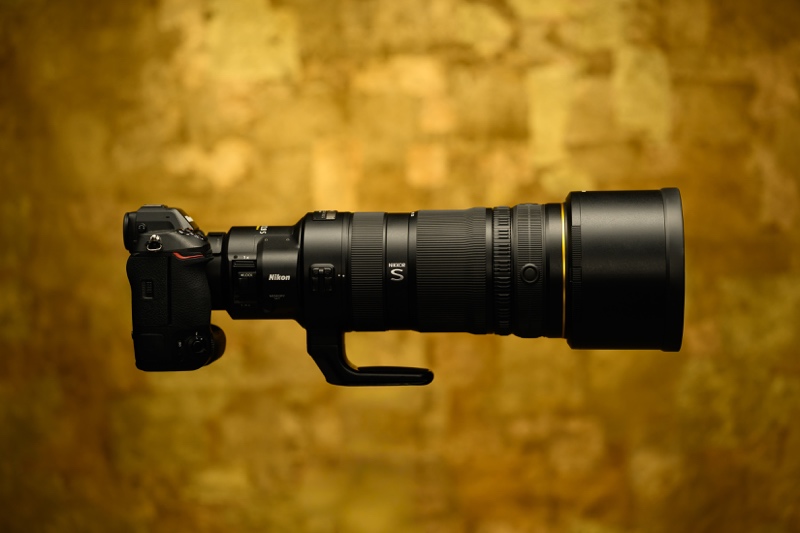
The 120-300mm f/2.8 TC VR S is now officially added to the lineup. Nikon’s new baby costs US$13,999 and weighs in at 6 pounds 0.5 ounces (2735g). The good news is that now that it’s official, the lens appears to be exactly the quality optic that we were all hoping for. The bad news is that price tag.
Let’s start with the pricing. The real problem for Nikon is that a light, competent 300mm f/2.8 now costs a bit over 2x in the Z-mount as it does in the Sony FE mount. You can buy a Sony A1 II and a 300mm f/2.8GM OSS for the price of the 120-300mm f/2.8 TC VR S. Ouch. Sure, sure, the Nikon version is a zoom with a built-in TC, so that’s got to be worth something, but 2x?
Nikon’s exotics now have very used-car-like list prices:
- 120-300mm f/2.8 TC VR S is US$13,999
- 400mm f/2.8 TC VR S is US$14,699
- 600mm f/4 TC VR S is US$16,199
I was one of those hoping that Nikon would draw the line somwhere around the US$9999 point, and manage to figure out how to produce the 120-300mm under that bar. But it seems the bar just keeps getting pushed higher, not lowered. The problem with that is that it means that most of us who need exotics are buying only one. At US$9999, I and others could consider two. At US$13,999+, sorry, Nikon isn’t going to get additional buying from us.
Pride goeth before the fall. Nikon is going to have trouble holding their sports photography pros with their exotic pricing. Whereas Nikon is undercutting Sony in body pricing, Sony is now undercutting Nikon in key telephoto lens pricing. Pros realize that their real investment is in lenses, not bodies, so Nikon’s reaching for your pocketbook on lenses is a long-term issue that’s troublesome.
The problem, of course, is that these big glass products require a lot of work to get right, starting with glass curing and polishing, but also in procedures that keep the narrow light paths absolutely aligned. To my knowledge, no one’s quite broken the code and figured out how to produce them faster or at lower cost. Still, the Canon 100-300mm f/2.8 is US$10,599, and Sony’s 300mm f/2.8 is just US$6799, so Nikon is significantly above them in pricing at the 300mm exotic point. This is just taxing to the Nikon pro.
Bonus Q&A
Why US$13,999? Did adding the TC really raise the cost by US$4000? Nikon appears to have created yet another new design for reasons that are currently unclear, but likely have to do with next generation camera-lens communications. This is consistent with past refreshes in the exotic lens lineup. But again, this leaves Nikon missing an affordable fast 300mm option in the Z-mount. That’s probably a mistake.
Why didn’t we also get a 180-400mm f/4 TC VR refresh for the Z-mount? I’m suspecting the reduced capacity of the Togichi plant during reconstruction. That, coupled with the overlap with the 120-300mm would likely have made Nikon prioritize one over the other. The 180-600mm f/5.6-6.3, while a stop+ slower, duplicates the 180-400mm’s range adequately, while “fast 300mm” remained uncovered by Nikon, thus the preference. For those that seem to think that the Z-mount’s larger size and shorter flange distance is the reason why Nikon is redoing the telephoto lineup, I’d say no. With traditional telephoto optical design, the Z-mount has no advantage over the smaller mounts, such as the Sony FE. Perhaps there’s an optical design for a telephoto lens that could take advantage of the extra width and shorter distance to the sensor from the rear element, but I haven’t seen one of those from anyone yet. The Z-mount’s advantage over F-mount is going to come from mount communications for the time being, and I believe we’re waiting for a next generation body to see what that really is.
Will Nikon make a 300mm f/2.8 or 200mm f/2? I’d like to think so, though to be honest, the market for those fast focal lengths is more limited than it is for other focal lengths these days. Back when we had more pros on the sidelines, no zooms, and better access up and down the field, 300mm was a very useful focal length. Now it’s usefulness—at least in a prime—is less useful. For wildlife, 300mm is too short for the way most people can position themselves vis-a-vis the animals. What I’d propose Nikon doing next is a 300mm f/2, which would give us an option that isn’t currently available.
Will the Chinese step in and give us more affordable options? Probably. But this isn’t quite as simple as it sounds. The bigger the lens elements, the better quality your glass pour has to be, and the longer it takes to get the curing and polishing correct. These are not things you automate easily nor maintain high quality on without a lot of time and effort. We’ve seen one fast telephoto out of China—the Laowa 200mm f/2—and it’s good but not great. There are a lot of problems that need to be solved to bring “affordable exotics” to market. That will take time.
I Don’t Understand the Pushback
The Z5IIC hit stores this past weekend, and quite a few stores managed to immediately sell out their initial shipment. Every store I’ve talked to so far is a bit surprised (and happy) that the camera had clear demand up front.
But the online forums are still full of “Nikon shouldn’t have made this camera” posts. Clearly Nikon should have made this camera, because there are customers that wanted it.
I’ll reiterate my previous statements after using it: it’s a decent camera, and I regard it as a very usable “compact" with the right small lens (e.g. 26mm f/2.8). Yes, it's a big compact, but by the time I added a usable grip to my Fujifilm X100VI, it too was a pretty big and heavy compact.
But let me put a point into context, given that I’ve used almost every “compact” on the market. When I’m on safari or on the sidelines, I have two big Nikon bodies with big lenses. I still have need for ~24mm (maybe as long as 35mm), and that need has generally been served by something I can stuff into my vest pocket. Now for the first time I can stuff something into that pocket that uses the exact same controls as my bigger cameras. I’m happy with that. Moreover, it uses the same batteries as my other cameras are using.
So, yes, you may find me wandering the stadia and savannah with a Z5IIC. Your mileage may vary.
Site Header Change
Yes, the image at the top of the site changed. Nikon keeps popping out new cameras and I needed to do something about that to look current without creating a long, wide line of miniature cameras.
In considering the site design problem, I noticed something: Nikon is extensively using pairing and echoing in their lineup. Technically, I could have also paired the Z8 with the Z9 visually, but I decided against that for the time being. Consider:
- Z8/Z9 — (Echo) A smaller version of the primary camera.
- Z6III/ZR — (Pair) A different body and UX for the same electronics.
- Z5II/Z5IIC — (Pair) Essentially two additional body choices (silver/black, without viewfinder).
- Zf/Zfc — (Echo) FX and DX expressions of the same idea.
- Z30/Z50II — (Pair) A different body and viewfinder removal for the (almost) same electronics.
Note also that the ZR and Z5IIC pair as headless cameras, while the Z50II and Z5II pair as DX versus FX variations.
You can now see why the Z7II folk are all complaining: they’re the lone stag not yet mated up at the current prom. Poor fellows. They used to be paired with the Z6II, but that couple broke up and the Z6 went on to find a different friend to hold hands with.
Yes, my tongue is a bit stuck in my cheek, but it does bring up an interesting question: will Nikon eventually mate the Z7 line up with an echo/pair? I can imagine two ways that could go: (1) a Z7III pairs up with the Z8 by going to a rangefinder style body; or (2) we get a distinct Z7III and what, a Z7R pairing (which implies an additional ZR, Z7R pairing)?
One thing seems clear: there’s method in Nikon’s madness. I doubt they would have gotten to the current situation without having fully thought through how the lineup appears and can be cross-marketed. Other than the Z7II, every other model has at least one, and in some cases, multiple pairings or echoes. This is the old up-sell, side-sell, down-sell marketing game done in an interesting way. It makes a lot of sense to me, even though I keep reading from you that it makes no sense to you.
Reminder: My Z5IIC Online Presentation
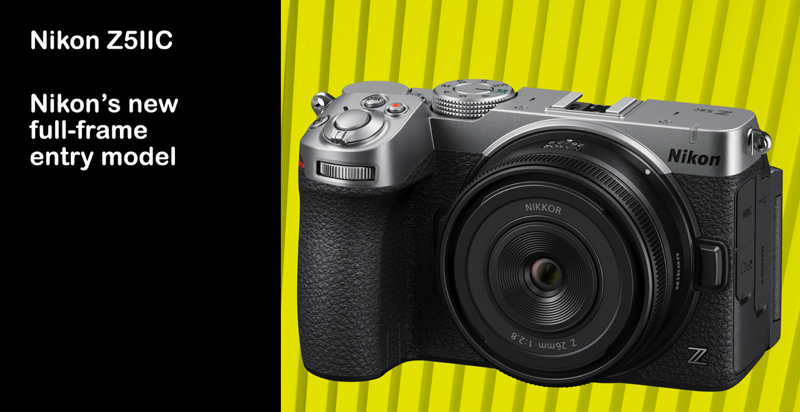
Mark Comon and Thom Hogan are at it again. On Wednesday, October 14th at 6pm PT we’ll be giving a full presentation on the Nikon Z5IIC based upon both our pre-release experiences with the camera. We’ll outline exactly what the Z5IIC is and isn’t, who it’s for, what it’s strengths and weaknesses are, as well as show images that we took with production-but-not-released cameras. We’ll try to put the “casual carry” camera in perspective, from Sony RX100 though Nikon ZR (though Nikon doesn’t think of that camera that way). As usual, we’ll try to answer any and all questions.
We believe, but can’t confirm, that the actual shipments for customers will begin on the 16th, so this presentation is a just-in-time look that may or may not drive you to your local store (that would be Paul’s Photo if you’re in Mark’s neck of the woods, Dan’s if you’re in my neighborhood). While we’re not expecting the Z5IIC to generate lines out the front of stores, if you’re interested in a specific style—the camera is available in black or panda, with or without kit lens—you might want to get in line. I expect the panda versions to be quickly sold out.
To get your free ticket to the online presentation, go to Creative Photo Academy and grab one before the 14th. We do record these presentations, so everyone who signs up will get a follow-up email the day after the presentation that gives you access to that.
——
For those that haven’t been following these CPA online sessions, I do each one in a different style. If nothing else, you’ll see some new presentation look, which I call Thom’s Template Du Jour. Maybe I’m in the wrong business...
WonderLantern and More Emerging
It’s been a while since we’ve seen someone attempting to hack the Nikon firmware. A new GitHub has appeared named WonderLantern—a play on the MagicLantern hacks for Canon firmware—and it has started deploying open source documentation for their project, though it is in very early stages at this point. The WondernLantern project is still in very early stages, with one contributor currently probing and attempting to document what’s happening in the Z6 and Z7 firmware (version 3.80) by running it on a separate ARM-based system under observation.
Meanwhile, in China, apparently they’re using AI to try to hack Nikon firmware. If I’m reading the reports correctly (I don’t read Chinese, so have to rely upon translations), at least one user there has managed to bring a Log3G10 gamma curve (i.e. RED curve) to the Z6III, Z8, and Z9. The interesting aspect there is that Nikon’s firmware is signed (and checksummed), so if the screen images I’ve seen are to be believed, the Chinese have cracked how to re-sign firmware files.
I’ll point out that Nikon is different than Canon in regards to firmware. Canon’s firmware can and will run in camera memory, which means that you can save executable code on a storage card with Magic Hack and run camera modifications from that directly. Nikon’s firmware runs only internally, meaning that you have to create a replacement firmware update and install it on your camera. Nikon allows you to revert firmware, so as long as you don’t brick your camera, you can always go back to original firmware.
I’m not sure what will result from all this experimentation, but the reason I look at it is to better understand how Nikon is engineering things. Nikon treats EXPEED as a black box to which only they have the keys to use, and they almost never disclose anything about what’s going on in the box. The most coveted hack would be to “unlock” raw pre-capture, but from my experiments Nikon’s black box does pre-capture using video and I don’t believe the data chain they use would support straight video-to-raw conversion at the speeds they’re achieving (120 fps in the Z8/Z9). But you never know until you get verification, so I’ll keep looking at how others tackle trying to figure out how the black box works.
Sigma and Tamron Add Lenses
We’ll likely see more lenses for the Z-mount this month, but today we got a pair:
Sigma has gone all superzoom on us, producing a 24-450mm equivalent lens for DX users. Those that want a do-all type of lens and don’t mind a big snout hanging out front of their small camera—especially when at 300mm—will probably find this lens worth considering. What seems curious is that Sigma introduced a 50-120mm f/2.8 OS lens for APS-C in the Canon RF-S, Fujifilm XF, and Sony E mounts simultaneously, with Nikon’s DX mount conspicuously absent. Seems like that would pair very nicely with Nikon’s recent 16-50mm f/2.8, doesn’t it? I’ll leave you to develop conspiracy theories as to why the Nikon version of the Sigma 50-120mm f/2.8 is missing. I suspect everyone will be talking about that for awhile...
Meanwhile, the Tamron’s published MTF specs look quite good for DX use (30-60mm equivalent), but fall off quite rapidly above that. At least the falloff curves seem fairly well behaved. Tamron is touting this lens as appealing to vloggers, and I’d say that’s likely the primary user, at least at the full frame (FX) side; it seems like a lens that pairs well with the Z5IIC for the young creator crowd.
Tip: Brighter Viewfinder for RAW (updated)
10/12: Article updated with additional information and explanation.
I hear this objection a fair bit, even though I don’t accept it: the viewfinder (EVF) is too dim.
There’s a simple temporary solution: set Tone mode to HLG while evaluating the viewfinder. This is a better choice than just increasing Viewfinder brightness, as it doesn’t just push all brightness up, it also changes the gamma that’s applied. Essentially you’re not just increasing the overall brightness, but you’re scaling that in a way that still looks natural.
Yes, HLG implies HEIF. As long as you don’t select a RAW+JPEG/HEIF Image quality, the only real impacts are two: (1) it will change your base ISO values as the camera shifts how it inteprets gain at the image sensor; and (2) if you use NX Studio on the resulting raw file that converter will automatically default to creating a HEIF instead of JPEG. #1 has implications for exposure, so it doesn’t always work for every situation. However, assign Tone mode to a button and you can switch in and out of the viewfinder effect quickly.
One of the reasons I was looking at this again has to do with the Z5IIC, as one of the complaints many are having without using it has to do with the Rear LCD. I wanted to see if the HLG trick applies to the Rear LCD, too. It does not. The trick only works with the EVF. Apparently the Rear LCDs don’t use the same brightness mechanisms as the EVFs.
Light, Filtration, Settings, Processing, Workflow
There’s been a couple of different complaints I’ve seen on different fora in recent weeks that all center around “this camera/sensor produces wrong color.” Typically, these are accompanied by some casual or non-equivalent examples that “show” the problem.
My experience has been different (and not just with Nikon, but across multiple brands). And every time I’ve gone all forensic on someone what ends up happening is that we find that something wasn’t understood correctly, something was assumed, or something wasn’t done correctly by the user. Sometimes all of the above.
So let’s talk about what involves color throughout the photographic process.
- Light. Light can be continuous spectrum, discontinuous spectrum, constant or sequential. So what wavelengths are showing up at the front of the lens are the first variable that has to be understood and possibly managed.
- Filtration. A filter on the lens and the filter over the image sensor can have impacts on the spectrum that eventually reaches the image sensor. You have control over any filter on the lens. Nikon has control over the filter over the sensor. In the DSLR era, the Nikon pro cameras (D4, D5, D6) tended to have more red sensitivity than the consumer/prosumer cameras (D500, D750, D850). I believe that tuning was deliberate to deal with low indoor lighting better (which tends to be red biased). However, in the Z System, Nikon has been pretty consistent with their filtration. I’m not finding any significant changes from model to model.
- Settings. If you’re taking JPEGs your white balance obviously needs to be correct. Nikon’s Auto white balance is not perfect. Indeed, so much so that if you’re taking photos outdoors in natural light, I strongly recommend that you use Natural light auto instead if you require automated white balance. If you control the lighting, you should also control the white balance (using a Preset you measure correctly). The reason why this step in the sequence is important for raw files occurs in the next:
- Processing. Nikon applies what they call white balance preconditioning to the raw Digital Numbers that are recorded in a raw file. The problem is that if your white balance is off, the preconditioning is also off, and that will have impacts further down the processing chain. If you’re using NX Studio to convert a raw file, it does the same thing as the EXPEED chip in the camera; Nikon is absolutely consistent about this. However, if you’re using a different converter you start running into interpretation and math differences. Adobe tends to produce more orange luminance (as well as other shifts), and its math engine isn’t great for big white balance swings (speed is emphasized over accuracy). Color models also play a part in this. Adobe, CaptureOne, and DxO all have different color models, and they build Nikon presets using different sample/test/change processes. It pays to learn exactly what each converter is doing, as it will impact the results. That said, I’ve been able to get solidly consistent and neutral results from all three of these, though not without some attention to detail and in the case of Adobe, some preset changes.
- Workflow. This is one area that doesn’t get enough coverage. For instance, if you use DxO PureRAW to pre-process an image, the process of taking a NEF to DNG and then into a converter seems to change the color values along the way. It’s one reason why I stopped using PureRAW, as it didn’t just add one workflow step, but several in order to correct the color integrity. You might not see it at first, but quite a few adjustments you can make (ACR, plug-ins, you name it) distort color values when you make them. You might notice this if you use huge Dehaze adjustments in ACR, for example, but that’s only one such control/change that may trigger color shifts.
I’ve written about this before, but basically when you get into these “wrong color, bad color, different color” arguments, the way you solve them is by starting with a known input (e.g. ColorChecker in known light) and a known output (e.g. Epson print on known paper, or sRGB JPEG). If the output doesn’t match the input, then the problem is somewhere in the above list. You simply follow a color-managed process and quickly discover the thing that’s making the change.
But that thing is not the image sensor. The image sensor is basically agnostic in this debate. Even the filtration over the image sensor, once understood and potentially accounted for, doesn’t really play in the debate.
———
Just to be complete: I have seen two cameras in two decades where there was an image sensor/filter problem. While I’ll never know exactly what the problem was, the two most likely candidates would be a badly mismatched green pattern (alternate rows of green in the Bayer pattern had different responses) and some issue with ADC timing. However, this type of problem is extremely rare, and Nikon will take care of it under warranty should you encounter it.